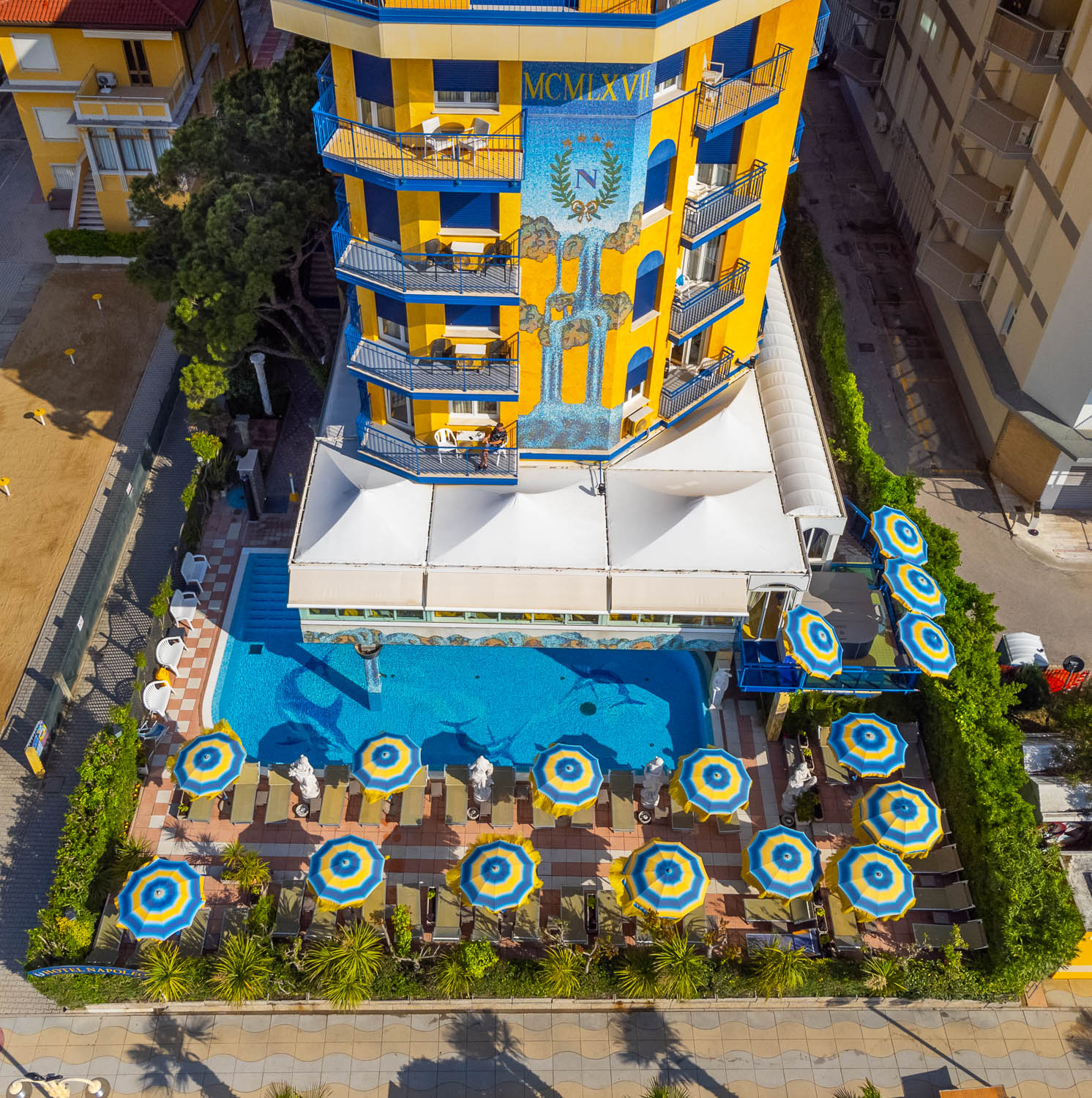
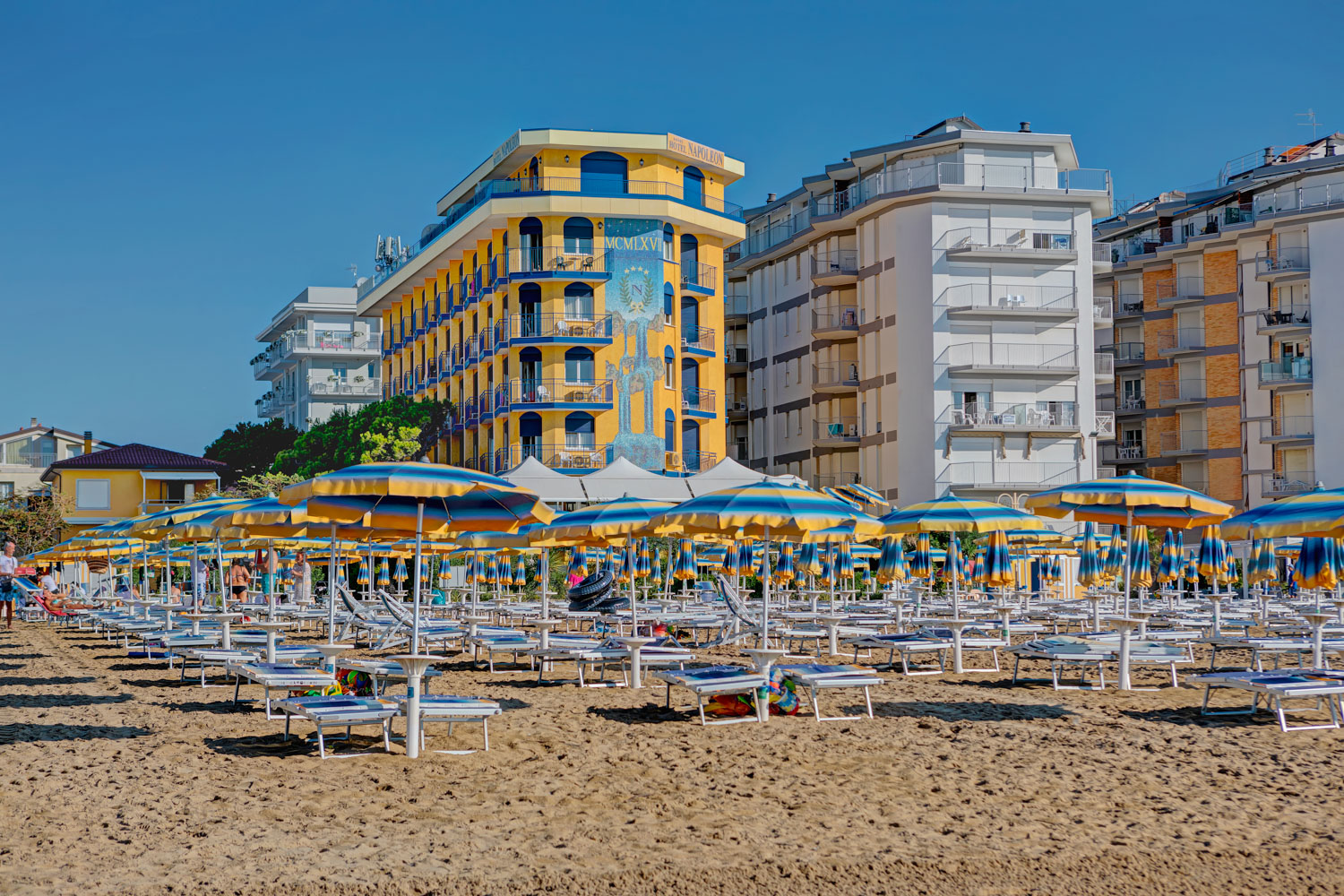
History is often an intricate labyrinth of contradictions capable of triggering conflicting emotions and passions. The rich Napoleonic past of the Veneto perfectly embodies this concept. In this article, we will explore the complex link between the Veneto, Napoleon and the Hotel Napoleon, telling you how the Hotel Napoleon in Jesolo represents in its name a tribute to a past history that, while arousing both fascination and resentment, finds in Napoleon one of its most charismatic interpreters.
Veneto and Napoleon: a complex marriage
It is undeniable that Napoleon was one of the greatest commanders in history, just as it is undeniable that he exerted a considerable influence on Veneto during the 19th century, so that the marriage between Veneto and Napoleon was a complex one. It was in fact during the first Italian campaign that the Republic of Venice went from the “Serenissima”, as it was called in testimony to its long political stability and social tranquillity, to being occupied militarily by Napoleon Bonaparte’s French army. It was 1797 when the Corsican leader formally declared war on the Venetian Republic.
Chronicle of a dramatic occupation
Let us briefly recapitulate the salient passages and the chronicle of a dramatic occupation:
- April-May 1797: Napoleon Bonaparte declares war on the Venetian Republic stating: “I will be an Attila to the State of Venice!”. A provisional Municipality is established in the city and the Tree of Liberties is hoisted in St. Mark’s Square, the banner of Venice is destroyed and the Golden Book of Nobility burned.
- June 1797: The French set sail from Venice with a fleet to depose the Provveditore generale of the Stato da Mar (as the maritime dominions of the Republic were called) and establish democratic government. The Provisional Municipality of the Ionian Islands is established.
- October 1797: The Treaty of Campoformio was stipulated between Napoleon and the Habsburg Empire, following the Leoben preliminaries. The territories of the Venetian Republic were thus handed over to the Archduchy of Austria. Before giving way to the Austrians, however, the French were concerned with plundering everything useful: the ships already armed are taken to Paris and the others sunk; convents, churches and palaces are stripped of their works of art (famous is the loss of Veronese’s Nozze di Cana, now in the Louvre; and then the works of Tiepolo, Bellini and Tintoretto); the Mint emptied; the treasure of St Mark’s liquefied to pay the Napoleonic soldiers; the bronze horses of the Basilica transported to Paris.
- January 1798: Austrian troops entered Venice and remained until 1805.
Napoleon in the Veneto: an indelible legacy
This briefly outlined tumultuous transition was not without conflict and controversy. While the Corsican leader undoubtedly brought administrative innovations and cultural changes, he also unleashed deep resentment among the locals who saw the French annexation as an act of oppression.
There were numerous Napoleonic reforms that brought considerable changes and a general modernisation of Veneto institutions: firstly, the territory benefited from the extension of the basic laws of the Kingdom of Italy and the economy was standardised by the adoption of French currency. Then, with the introduction of the Concordat with the Holy See, the importance of religious tolerance was emphasised, while the judicial system was reorganised according to the principles of the Civil Code (the Code Napoléon), which sanctioned equality before the law, freedom of conscience and the abolition of feudal bonds, also insisting on the sacredness of the right to property. Then, the establishment of a network of primary schools helped to promote literacy among the population.
On the other hand, this period of reforms was darkened by the dramatic experience of the looting of the Republic’s treasures, which generated a feeling of revenge still only subsiding under the ashes of time, by the measures of the ‘government of terror’ perpetrated by the French and, in general, by the profound anguish caused by the presence of the first foreign troops on the territory since the foundation of the city of Venice (421 A.D.).
Napoleon at the cinema
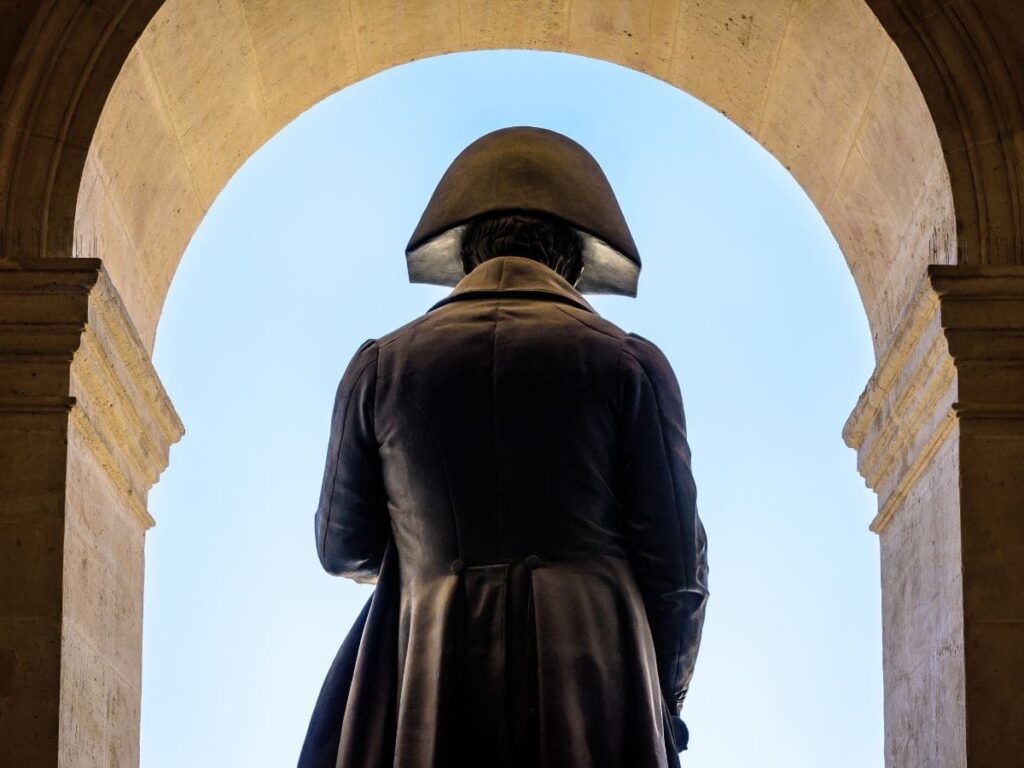
The figure of Napoleon Bonaparte has always fascinated the film world, inspiring numerous films that explore his life and historical impact. Among the most famous and influential films on his subject is Abel Gance’s Napoleon (1927), famous for its use of the wide-screen format and dynamic editing. Then King Vidor’s War and Peace (1956) focuses on Napoleon’s Russian campaign and Yves Simoneau’s Napoleon, a 2002 TV miniseries that explores the emperor’s life in depth. Finally, Ridley Scott’s very recent Napoleon, which reinterprets his character and life from a fresher perspective. Even the cinema, therefore, never ceases to be passionate about the life of the French general, exploring the complexity of his historical figure in limbo between military genius and controversial political legacy.
Conclusion: an elegant tribute to contradictory history in the name of a hotel
The Hotel Napoleon, in the heart of Jesolo, is an elegant tribute to the contradictory history that linked Napoleon to the Veneto region. In fact, the attraction exerted by the name “Napoleon” is due to the power of a name that is symbolic of an era of radical transformations, of cultural and identity conflicts, but also of significant openings towards new ideas and trends that are now integrated in the modern Veneto.
Despite the divisions and conflicts of the past, the complex figure of the Corsican leader, his epic deeds and historical relevance continue to fascinate historians, enthusiasts and visitors from all over the world. The choice to celebrate Napoleon in the name of our facility is in this sense an invitation to explore this history full of contrasts, to understand the challenges and triumphs of the past and to celebrate the Veneto by embracing all facets of its historical legacy.